
How to Normalize Mental Health as a Child of Immigrants
Whether you accept it or not, our mental health is impacted every single day by our lives, our communities and the world in general. But, thinking about therapy can feel like such a big step, so let’s dip your toes in; just to see what it feels like.
Normalizing mental health in immigrant communities can be challenging, but we can start naming “small” things to get each other used to this topic.
Here’s your guide to starting the conversation in every area of your life.
With Yourself
Stop judging your feelings and start getting curious.
Monitor your self-talk: Is that your voice, or the voice of a critical parent?
Somatic Check-ins: Check in with your body on a regular basis —does your jaw clench when your boss walks into the room? Does your heart start beating when you’re watching something suspenseful?
Self-Reflect: Notice your unique triggers. What makes you feel angry, happy, or sad? Emotions are information, you don’t have to be scared of them.
With Parents
Using the words “mental health” might land you a dismissive scoff from your parents, but dropping small hints can help create longer term shifts.
Use your native language: Use words like Khabraat (fear/anxiety in Punjabi) to bridge the gap. I have also heard the word “tension” in relation to stress.
Validate the worry, not the behavior: When they ask about marriage, try: "Mom, I know you worry about my future because you love me, and that stresses you out".
Highlight community heroes: Talk proudly about famous people in your community speaking out about mental wellness to build credibility
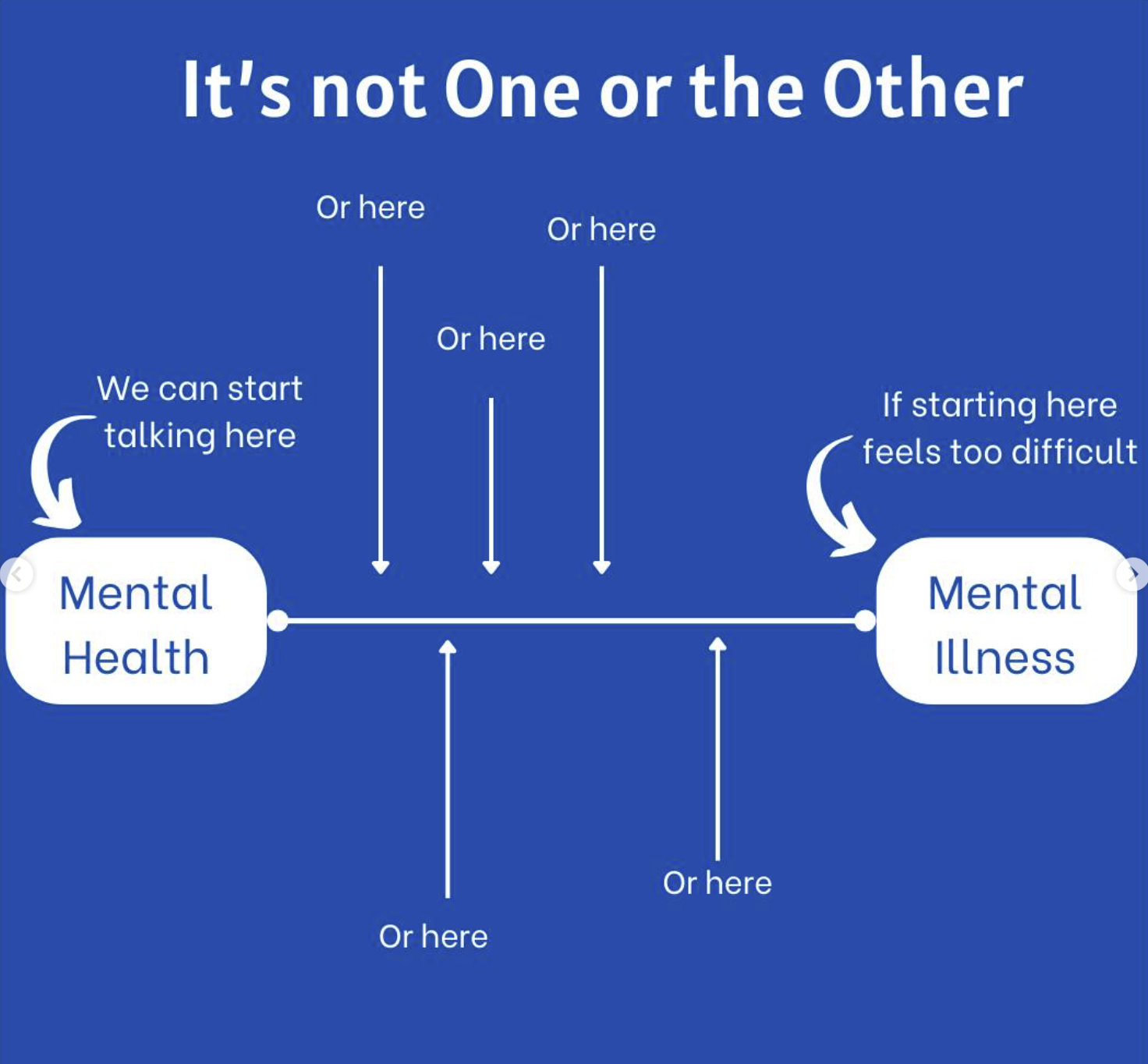
With Siblings, Partners and Friends
Our peers can be our allies. We can normalize vulnerability with eachother, by practicing it in small ways
Call out the jokes: It’s normal to make fun of your siblings and friends, but what if you also did a quick check in to ask if the “harmless” jokes are bothering them. And if it is, respect them and stop.
Set Clear Boundaries: Use scripts like: "These are your values, but they aren’t mine. Let’s figure out how we both get what’s important to us".
Daily Connection with partner: Dedicate 10 minutes before bed to talk about anything other than your to-do list. You can ask about eachother’s hopes and dreams. You can find a list of deeper questions through a simple web search and increase your vulnerability with eachother.
With Your Children
If you’re uncomfortable with your child’s big emotions, you’ve got work to do. Let yourself sit with the discomfort of not fixing the problem. Here are a few ways
The "No-Cry" Rule: Never tell a child to "stop crying" or "don't be sad." Let them cry as loud as they need while you hold them. Time it. I can almost guarantee they wont last more than 5 minutes.
Visual Tools: Put an emotion wheel or emoji chart on the fridge. Refer to it daily.
End-of-Day Ritual: Ask: "What was your favourite part of your day? What were you the most proud of? What are you grateful for today?" This helps primes their brain to focus on what is going well.
Mental Health Isn’t Scary When We Talk About It Everday
If you’re ready to explore your own mental health, reach out for a 15 minute consultation today.